
Information Evening
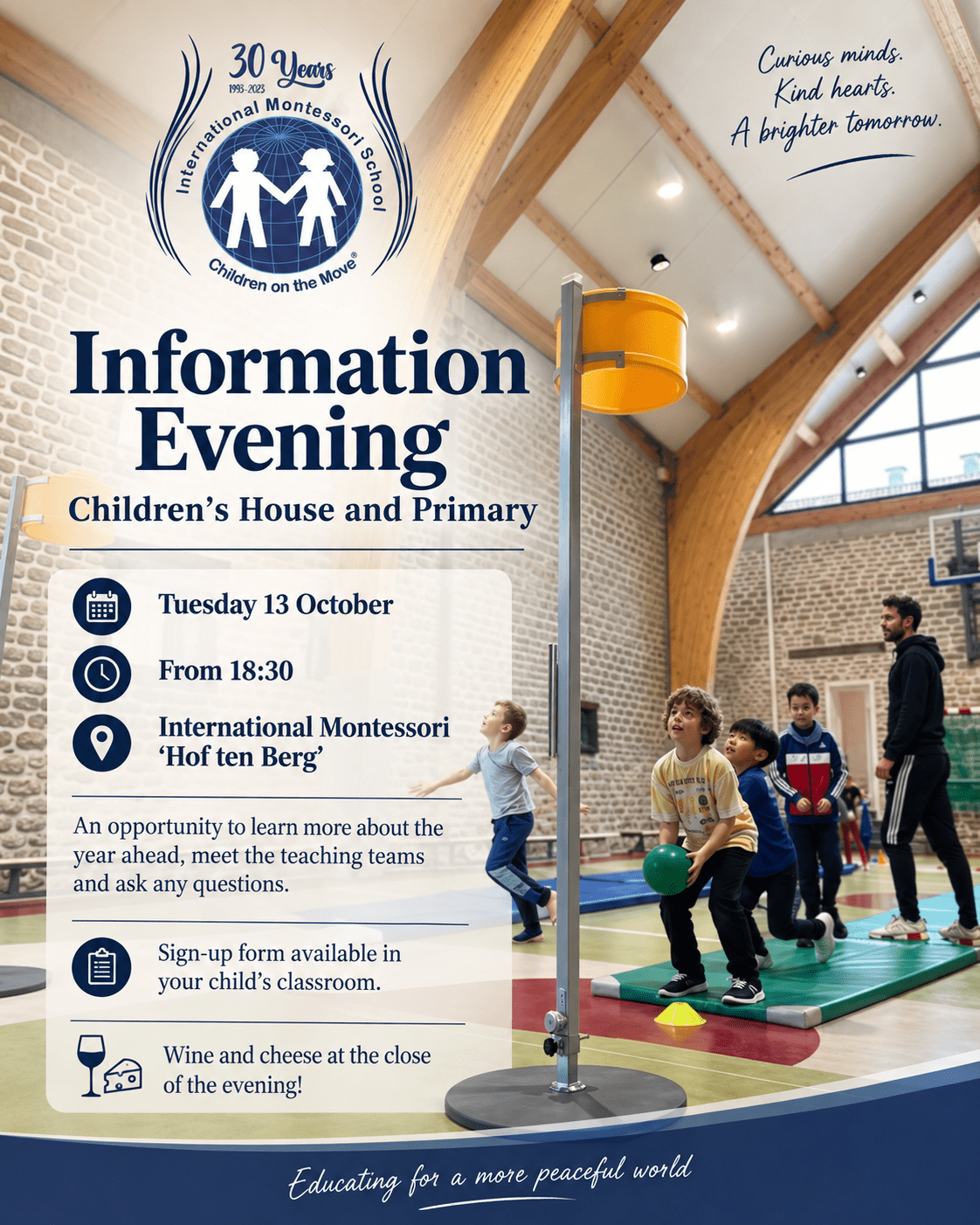
Hof ten Berg | Children's House and Primary
Info Evening
Tuesday October 13th
Children’s House and Primary – ‘Hof ten Berg’
From 18:30
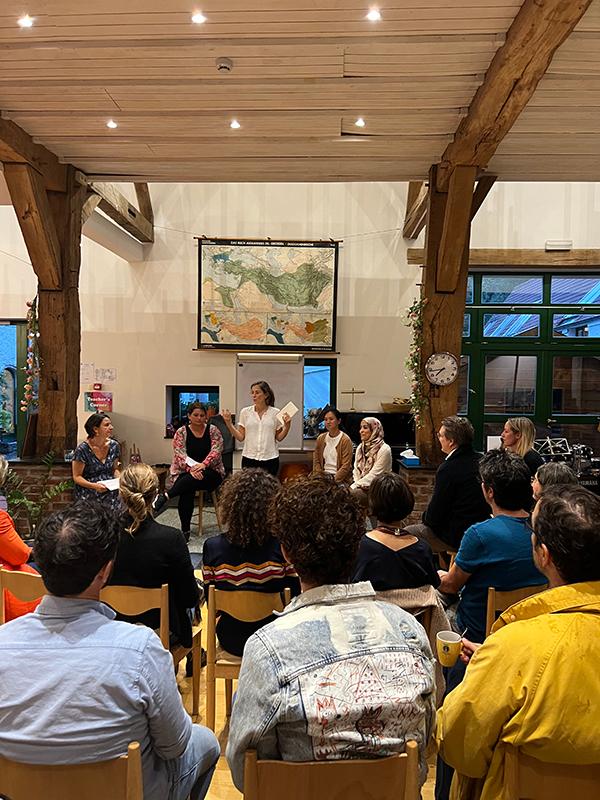
A new series of Information evenings for families
At the start of each school year, families are invited to attend a new series of four Information Sessions. These evenings provide valuable insight into the curriculum, the Montessori approach, and the integrated learning taking place across the school. They also offer an excellent opportunity for parents to understand where their child is developmentally, or, for those preparing for a transition to a new age group, to learn what lies ahead in the following school year
The Montessori School as a Prepared Environment for Growth
The Montessori school is one of the ‘environments’ in which the child develops. It provides level-appropriate experiences and opportunities that support healthy growth. Unfortunately, the world outside is often out of sync with human development. Many children spend significant time on screens and are exposed to content far too early, which can affect balance and well-being. Their hormonal and cognitive development has not yet caught up with what they encounter online.
The recent legal prohibition of phones and smartwatches in schools helps protect childhood to some extent. Parental monitoring of screen use outside of school hours further supports children in becoming well-regulated individuals.
At school, we believe wholeheartedly in real-life human interaction, meaningful work, and the development of values. Children thrive when they learn from people, through hands-on experiences, and within environments designed for their development - not from what screens have to offer.
You are warmly invited to an inspiring series of Information Evenings under the theme:
“Do what you love – love what you do.” We will explore the ‘Love of Learning’, the development of ownership, the richness of the Montessori curriculum, children's interests, and the essential role of Real-Life Learning.
Freedom and Responsibility
Together with the freedom comes the balance. The child also has a ‘responsibility’ in that we work in the classroom. Children learn to work constructively, to use the materials as presented, to choose tasks appropriate to their level, and to remain engaged in meaningful activity. Social development grows naturally: children may work alone or with others, invite a friend, or ask to collaborate. These experiences form the basis of healthy social relationships. Often unspoken but deeply understood is the guiding principle: “My freedom ends where someone else’s freedom begins.” This supports the development of respect for oneself, for others, and for the environment.
Development in Secondary
In Secondary, these foundations expand as social relationships and identity formation reach new levels. The teenage years represent a ‘re-birth’: first developing “me” as an individual, and then “me” as part of a group. Later, this extends into understanding oneself as a member of society.
Students work on the curriculum and on autonomous projects, in small groups and at personalised levels. It is essential not to be judgmental; adolescents are highly sensitive to this and feel a strong need to make their own decisions. The focus lies on logical thinking, weighing ideas, and exploring possible choices. Experiences are balanced by offering freedoms appropriate to their maturity level and by setting logical limits, helping them become increasingly self-regulating.
By respecting the developmental processes of adolescence, and by asking for contributions to personal growth, academic understanding, and community life, we guide students toward becoming responsible, thoughtful individuals.